What Is My Face Shape?
What is my face shape? You can find out in two ways: upload a straight-on photo and let the tool measure your face in your browser, or take the five-step face shape quiz with a mirror and a tape measure. Both use the same rules and give you a shape plus how close the others were.
Choose a straight-on photo of your face with your hair pulled back. The tool finds 468 points on your face and measures its length and its widths at the forehead, cheekbones and jaw.
Your photo never leaves your device.
How the tool decides your face shape
Every face shape comes down to four measurements: face length and the widths of the forehead, cheekbones and jaw. Two more observations settle close calls: whether the jaw has a sharp corner, and whether the chin is pointed, rounded or square.
The photo tool finds 468 points on your face, measures the same distances, and turns them into the same five answers as the quiz. Each answer adds points to the shapes it fits. These are the rules it follows:
| Measurement | What it points to |
|---|---|
| Length ÷ cheekbone width | Under 1.2: round or square. 1.2–1.5: oval, heart, diamond or triangle. Over 1.5: rectangle or oblong. |
| Widest part | Forehead: heart. Cheekbones: oval, round or diamond. Jaw: triangle. All within about 5%: square, rectangle, oblong or round. |
| Jaw corner | Sharp: square, rectangle or triangle. Soft curve: round, oval or oblong. Steep taper: heart or diamond. |
| Forehead vs jaw | Forehead wider by more than about 8%: heart. Jaw wider: triangle. Otherwise similar. |
| Chin | Pointed: heart or diamond. Rounded: round, oval or oblong. Square: square, rectangle or triangle. |
How to determine your face shape by hand
Pull your hair back and use a soft tape measure, or a piece of string and a ruler. Stand square to a mirror and keep your head level.
1. Face length
From the centre of your hairline down to the bottom of your chin. If your hairline is receding, start where it used to be.
2. Forehead width
Straight across, halfway between your eyebrows and your hairline, from one side to the other.
3. Cheekbone width
Across the highest, widest point of your cheekbones, just below the outer corners of your eyes.
4. Jaw width
From just below one ear, where the jaw turns, to the same point on the other side.
How to determine face shape from a photo
A photo works well if it is taken the right way. Phone selfies taken at arm's length can stretch the nose and narrow the jaw, so a little distance helps.
- Look straight at the camera with your head level, not tilted or turned.
- Use even light from the front, such as facing a window.
- Pull your hair fully off your forehead and away from your jaw.
- Hold the camera at eye height, at least an arm's length away, or ask someone to take it.
- Keep a neutral expression with your mouth closed. Smiling widens the cheeks.
The 8 face shapes at a glance
Most faces blend two shapes. Weight changes and age can shift a borderline result, so if your top two are close, read both guides.
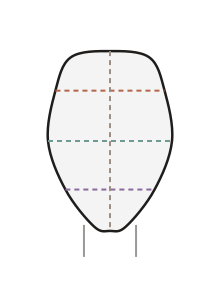
Oval
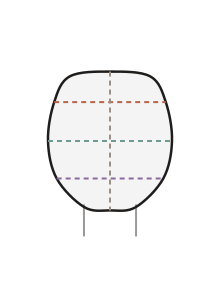
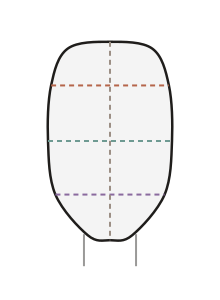
Slightly longer than it is wide, with cheekbones as the widest point and a softly curved jaw. Most cuts and frames work, so you can choose by mood and hair texture.Round
About as long as it is wide, with full cheeks and a jaw that curves without corners. Height on top and vertical lines add length.Square
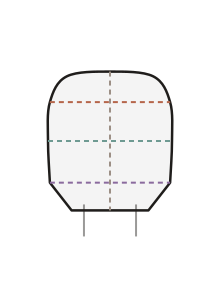
A square face is about as long as it is wide, with forehead, cheekbones and jaw all close in width and a strong, angular jawline. Soft movement and a little height keep those corners from boxing the face in.Rectangle
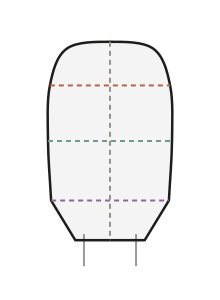
A long face with straight sides, a strong angled jaw and a flat chin. Styles that add width and curve at the jawline balance it best.Oblong
Long and fairly narrow, with straight cheeks and a jaw that curves gently into a rounded chin. Fringes and side volume are your best tools.Heart
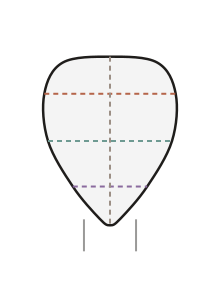
A heart face is widest at the forehead and narrows to a slim jaw and pointed chin. You look best when hair and frames add weight to the lower half and keep the top quiet.Diamond
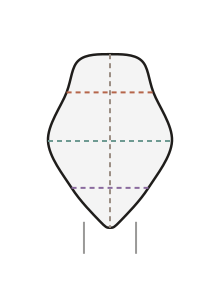
A diamond face is widest across the cheekbones, with a narrow forehead and a narrow, pointed chin. Your styling goal is to add width above the brows and below the ears so the middle stops doing all the work.Triangle
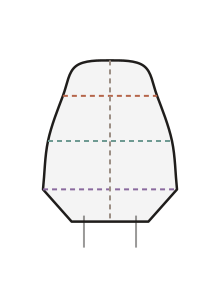
A triangle face has a jaw wider than the forehead, with angular corners and a flat chin. Your styling balances the base by building width and interest above the eyes.
Face shape questions
A near tie means your face sits between two shapes, which is common. Read both guides and look for the advice they share. If one guide's hairstyles and frames already match what you know looks good on you, that is your answer.
Any app can only measure what the photo shows, so lens distortion, head tilt and hair all affect the result. This tool runs in your browser without uploading your photo, shows you the lines it measured, and publishes its rules so you can check them by hand.
Trace your reflection on a steamy bathroom mirror with a fingertip or lipstick, keeping your head still. Step back and compare the outline with the eight shapes. It is rough, but it shows your widest point and jaw shape clearly.
There isn't one. Styling guides often call oval faces balanced, which is why advice for other shapes sometimes aims to look more oval. That is a styling convention, not a ranking. The goal of knowing your shape is choosing cuts and frames you like, not changing your face.
Your bone structure stays the same, but weight changes, muscle and age shift the soft tissue over it. Fuller cheeks can move a borderline oval toward round, and loss of fullness can make a face read longer. Remeasure if your weight changes noticeably.