Color season · Autumn family
Warm (True) Autumn Color Palette
Warm Autumn, also called True Autumn, is a warm, rich, medium-deep color season built on golden undertones. Your colors are the ones you see in a forest in October: rust, mustard, pumpkin, olive, teal and chocolate. Warmth is the leading trait, and a slight earthiness comes second, so nothing here is icy or neon.
If gold jewelry makes your skin look healthy and silver makes it look tired, start here. The true autumn color palette below lists 30 shades with hex codes, followed by neutrals, makeup, hair, outfits, and how to separate Warm Autumn from Warm Spring and Deep Autumn.
- Undertone
- Warm
- Depth
- Medium to deep
- Chroma
- Medium
- Contrast
- Medium
The True Autumn color palette, color by color
Tap any swatch to copy its hex code, or download the full palette as an image for your phone.
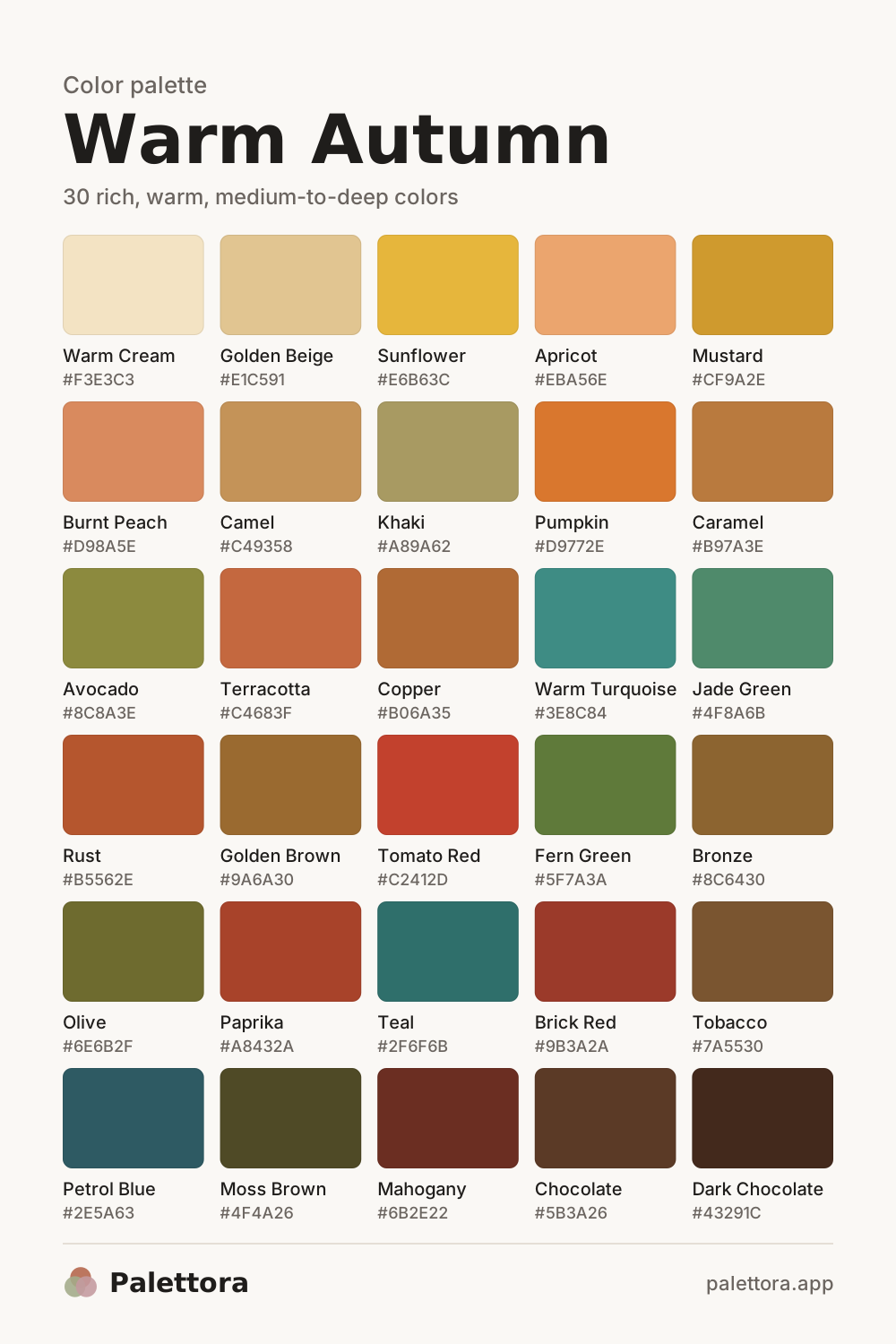
How to read this palette
Hue is where this season is most extreme. Every color carries yellow: reds lean toward tomato and brick, greens toward olive and fern, and even the blues are teal and petrol rather than royal. Blue-based pinks, purples and greys are missing on purpose.
Value runs from warm cream down to dark chocolate, but most of the palette sits in the medium to medium-dark range. That middle depth is why rust and bronze look natural on you while pale pastels look washed out and near-black looks heavy.
Chroma is medium to rich. These colors are clearly stronger than Soft Autumn's dusty shades: rust, tomato red, pumpkin and mustard have real saturation. Yet they stay earthy rather than electric. Mustard is your yellow, not lemon. If a shade reminds you of paprika, honey or moss, it almost certainly belongs to you.
What is Warm Autumn?
Warm Autumn is the most golden of the twelve seasons. Rust, mustard, pumpkin, olive and teal make your skin glow, while anything icy, pink-based or grey drains it. Think of spice jars and turning leaves, not sweets or snow.
- Skin: golden, peachy, bronze or warm olive, from fair to deep. Freckles are common, and the skin tans to gold or bronze more often than it burns pink.
- Hair: copper, auburn, strawberry red, golden brown or warm chestnut. Even dark brown hair shows red or gold highlights in sunlight.
- Eyes: amber, topaz, warm hazel, golden brown, olive green or teal, often with gold flecks around the pupil.
- Contrast: medium. Hair is usually a few shades deeper than skin, but nothing reads as stark black against pale.
- Gold jewelry blends in, while bright silver looks like it belongs to someone else.
A quick self-test
Stand by a window in daylight with a clean face. Hold an orange or rust cloth under your chin, then a cool pink one. If orange makes your skin smoother and your eyes brighter, while pink makes you look flushed or sallow, Warm Autumn is a strong candidate.
Best Warm Autumn neutrals
Your basics are golden, not grey. Warm cream stands in for white, chocolate and dark olive stand in for black, and khaki replaces stone grey. A camel coat or tobacco suede jacket will go with nearly every color on this page.
Colors Warm Autumn should avoid
- Optic White#FFFFFF
- Jet Black#0A0A0A
- Icy Blue#D6E6F2
- Pastel Pink#F4C2D7
- Lavender#C7B8E0
- Blue-Grey#8A9AAE
- Fuchsia#C2185B
- Royal Blue#2346A0
Everything on this list is blue-based, and that is the main problem. Cool pastels like icy blue, pastel pink and lavender make golden skin look yellow or grey. Fuchsia and royal blue clash with the copper in your hair. Optic white and jet black are harsher than your medium contrast, so swap them for warm cream and chocolate. Keep any favourites from this list for shoes or bags.
Metals and jewelry
- Yellow gold
- Brass
- Copper
- Bronze
- Antique gold
Yellow gold is your signature metal, and you can wear it in more finishes than Soft Autumn can: polished, brushed or hammered all work. Copper and brass look especially good with red or auburn hair. Chunky, textured pieces suit you better than thin, shiny chains. If you own silver you love, choose oxidised or blackened silver, which reads warmer.
Warm Autumn makeup
Pick shades marked golden, warm or yellow, and skip anything labelled pink, rosy or cool. Test on the jaw by a window: the right match vanishes, a pink one turns ashy, and an orange one sits on top like a mask.
- Warm Peach Nude#C9825F
- Terracotta#B05A3C
- Burnt Orange#B5502A
- Brick Red#9B3A2A
- Cinnamon Brown#8A4A30
- Peach#E59A72
- Warm Apricot#D98A5E
- Terracotta Glow#C06A48
- Bronze Blush#A8673E
- Golden Bronze#A07432
- Copper#B06A35
- Olive#6E6B2F
- Teal#2F6F6B
- Warm Brown#6B4428
- Chocolate Liner#43291C
Warm Autumn hair colors
Copper or ginger
Your most natural-looking dye shade. Ask for a golden copper rather than a pink-red.
Rich auburn
A red-brown that suits medium to deep skin and echoes rust and mahogany in the palette.
Golden chestnut
A low-maintenance brown with visible warmth. Good if you want depth without obvious red.
Honey and amber highlights
Chunky or babylights in honey lift dark hair and bring gold toward your face.
Caramel balayage
Works on golden brown bases and grows out softly, since your roots are already warm.
Hair colors to avoid
- Ash blonde, ash brown or platinum, which strip the warmth that makes your skin look alive.
- Blue-black or jet black, which looks heavy and flattens freckles and golden tones.
- Burgundy, violet-red or cherry tones, which fight with peachy skin.
Nail colors for Warm Autumn
Cream finishes and warm metallics like bronze or copper shimmer both work. For a polish that goes with everything, choose terracotta in summer and brick red or olive in winter.
Warm Autumn clothing and outfit tips
- Put your richest colors closest to your face: a rust scarf, a teal knit or a mustard blouse does more for you than a beige one.
- Medium contrast suits you. Pair one mid-dark color with one lighter one, such as olive with warm cream, rather than going fully tonal or fully stark.
- Instead of a navy suit, try chocolate, olive or tobacco. If you need blue, petrol blue or teal reads as polished without cooling your skin.
- Textures with depth flatter golden coloring: corduroy, tweed, suede, chunky knits, waxed cotton and raw silk.
- Choose denim with a warm, slightly faded mid-blue wash, and pair it with camel or rust rather than grey.
- Prints in paprika, mustard and olive will feel like your colors even when the base is cream.
Outfit combinations
Harvest office
ChocolateWarm CreamRust
Chocolate trousers and blazer over a warm cream shell, with a rust silk scarf at the collar.
Forest walk
OliveMustardTobacco
An olive field jacket, mustard rollneck and tobacco suede boots.
Teal and copper
TealCopperGolden Beige
A teal knit dress, copper earrings and a golden beige trench. Teal keeps the look fresh.
Saturday denim
PumpkinCamelDark Chocolate
A pumpkin sweater over jeans, a camel coat and dark chocolate loafers.
Dinner in red
Tomato RedBronzeMahogany
A tomato red wrap top, bronze jewelry and mahogany trousers or skirt.
Green on green
Fern GreenKhakiMoss Brown
Fern green shirt, khaki chinos and a moss brown belt for an easy tonal look with depth.
Spice market
PaprikaPetrol BlueWarm Cream
A paprika midi skirt with a petrol blue cardigan and a warm cream tee.
Build a small capsule wardrobe
- Choose three base colors: warm cream for tops, camel or khaki for layers, and chocolate or dark olive for trousers and shoes.
- Add two accent colors, for example rust and teal. They work with each other and with every base color.
- Invest in one coat in camel or tobacco. It will sit over every outfit without competing with your accents.
- Use accessories in gold, brass and cognac leather to tie the capsule together, so you never need black.
Patterns and prints
Leaf print
Avocado and Olive on Warm Cream
Gingham
Rust and Brick Red on Sunflower
Small florals
Avocado and Moss Brown on Mustard
Plaid
Rust and Dark Chocolate on Camel
- Medium-scale prints suit medium contrast. Paisley, small-to-mid florals and plaids in rust, mustard and olive look right on you.
- Look for warm, earthy motifs: autumn leaves, botanical prints, ikat, kilim-style geometrics and leopard in caramel and chocolate.
- Tartans work when the base is brown, olive or rust. Avoid black-watch plaids with navy and black.
- Avoid high-contrast black-and-white prints and pale, cool florals on white grounds.
Accessories and natural materials
- Leather and suede in cognac, tobacco, tan or chocolate. Choose these over black for bags, belts and boots.
- Glasses frames in warm tortoiseshell, honey horn, olive or bronze metal.
- Stones with a golden glow: amber, tiger's eye, carnelian, citrine, topaz and turquoise set in gold.
- Natural materials like wood, cork, rattan, wool felt and hammered brass echo the palette without effort.
How to tell Warm Autumn from Warm Spring and Deep Autumn
Warm Autumn vs Warm Spring
- What you share
- Both seasons are warm first, with golden undertones, copper or golden hair, and gold jewelry. Peach, camel and warm turquoise suit both of you.
- What differs
- Warm Spring is clear and lighter, so it wants bright, fresh colors like poppy and kelly green. Warm Autumn is earthier and deeper, and those same brights can look loud on you. Your colors look slightly toasted by comparison.
- How to tell which you are
- Hold up a clear kelly green and an olive green. If kelly makes your eyes sparkle, try Warm Spring. If olive looks richer and kelly looks like a costume, you are Warm Autumn.
- Colors to borrow from Warm Spring
- Warm Spring shares your golden base, so its clearer, sunnier shades are within reach. Sunflower, apricot and warm turquoise sit right on the shared edge, and they lighten your look in spring and summer.
- SunflowerApricotWarm Turquoise
Warm Autumn vs Deep Autumn
- What you share
- Both are autumns with warm, rich, earthy colors. Rust, olive, teal and chocolate suit both, and both look better in gold than silver.
- What differs
- Deep Autumn is dark first, with higher contrast and a few near-black shades. Warm Autumn sits at medium depth, so the darkest browns and burgundies can look heavy on you, while lighter mustard and apricot still work.
- How to tell which you are
- Try a very dark espresso top, then a mustard one. If espresso makes your features sharper, lean Deep Autumn. If mustard warms you up and espresso casts shadows, stay with Warm Autumn.
- Colors to borrow from Deep Autumn
- Toward Deep Autumn, take the darker end of your range: mahogany, dark chocolate and petrol blue. They give you evening and winter options. Stop before burgundy and aubergine, which lean too cool and too dark for you.
- MahoganyDark ChocolatePetrol Blue
Warm Autumn questions
Yes. True Autumn is the older name used in many 12-season systems, and Warm Autumn describes its main trait. Some analysts also say Golden Autumn. All three describe the autumn that is warm before anything else, with medium depth and earthy, moderately rich colors.
It is the warmest autumn, and one of the two warmest seasons overall alongside Warm Spring. There is no cool element at all. That is why blue-based pinks, purples and grey look so wrong on you, and why even your blues are teal-tinted.
Classic navy is usually too cool and too dark for you. If you need a dark blue for work, try petrol blue, deep teal or a navy with a green cast. Alternatively, swap navy for chocolate or dark olive, which give the same formal look with more warmth.
Pick an orange-based red: brick, tomato or burnt orange. These echo the warmth in your skin. Blue-based reds like cherry or raspberry can make your teeth look yellow and your skin look ruddy. For a softer option, a terracotta or cinnamon lip works every day.
Your skin stays golden, so warm colors still flatter you. Grey or white hair lowers your contrast and adds a cool note, which makes warm cream, camel, teal and terracotta even more useful. Avoid going ashy with dye; a warm golden gloss blends grey more kindly.
Not sure you are Warm Autumn? The quiz scores warmth, depth and clarity separately and also shows your runner-up season.
Take the color quiz