Guide
Fair Skin: Undertones, Colors, Makeup, Hair and Sun Care

Fair skin is the lighter end of the human range: skin that burns quickly, shows flushing and veins easily, and sits in the top two rows of a skin tone chart. Being fair tells you how light you are, not which colors suit you. That second answer depends on your undertone, which can be cool pink, warm peach, neutral or olive. This guide covers how to tell where you sit, then clothes, makeup, hair and sun care for each type.
What counts as fair skin
On our chart below, fair skin covers the two lightest rows, "Very fair" and "Fair". Read across a row and the depth stays the same while the undertone changes. Read down a column and the undertone stays put while the skin gets deeper.
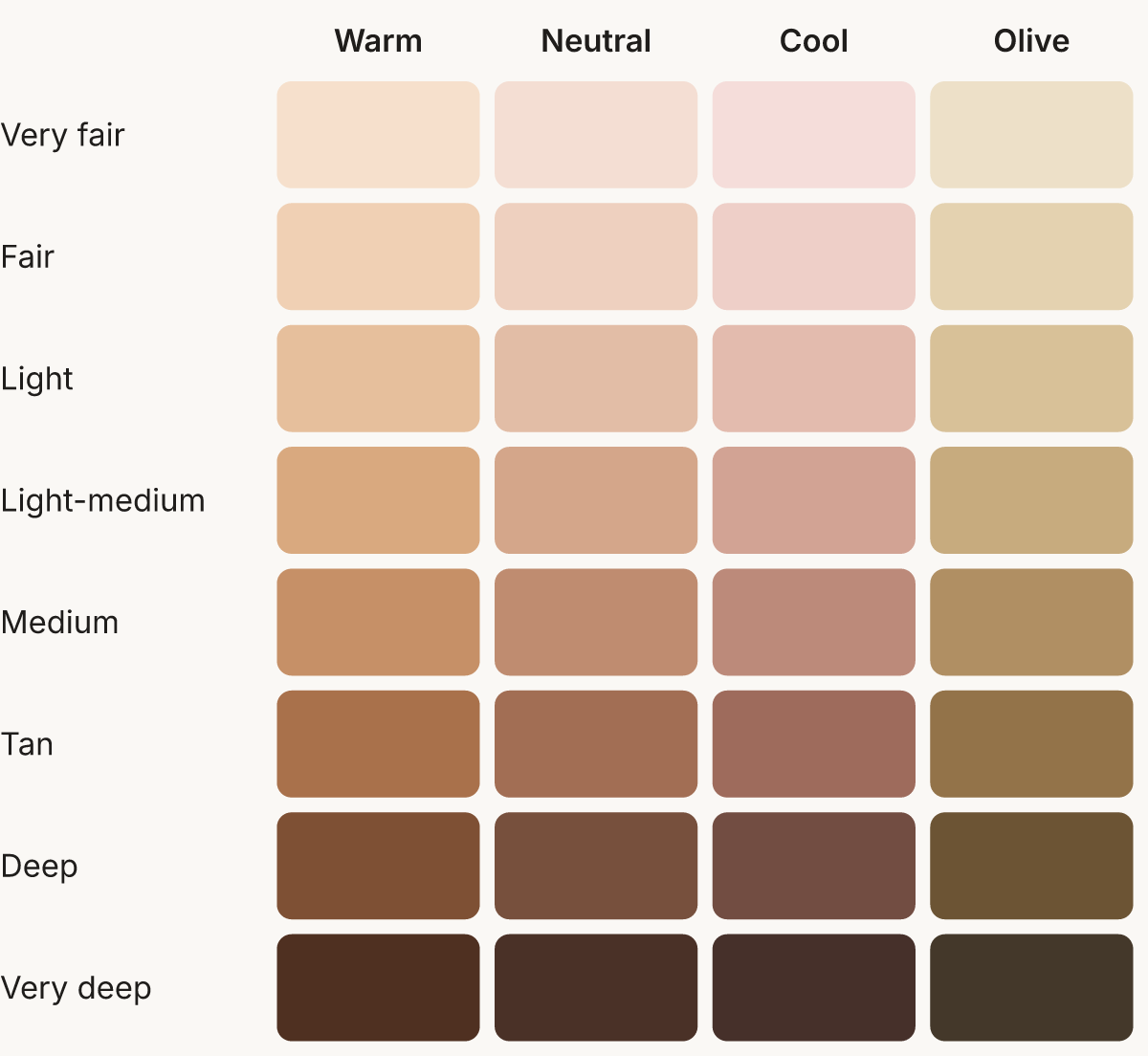
A few everyday signs point to fair skin. You burn before you tan, or you never really tan. Blue or purple veins show clearly at your wrist. Blushing, cold weather and exercise turn your cheeks visibly pink or red.
Pale and fair are often used as twins, but people tend to say "pale" for the very lightest skin, often with little visible warmth. If that is you, our guide to the best colors for pale skin has swatch blocks and outfits for each undertone.
The undertones within fair skin
Two people can share the same light depth and still need opposite wardrobes. Hold plain white paper beside your bare face in daylight, or take the undertone test, before you shop.
Cool pink
Your skin reads rosy or slightly blue-pink next to white paper. Silver jewelry tends to blend in, while gold can look brassy. Redness often shows around the nose and cheeks.
Warm peach
Your skin has a peach, ivory or golden cast, and freckles are common. Gold sits comfortably on you. Bright white can look a little stark against your face, while cream looks softer.
Neutral
You see neither clear pink nor clear gold. Both metals work, and you can borrow from warm and cool lists as long as the color is not extreme.
Olive-fair
Light olive skin has a green-beige or khaki note that often goes unnoticed. You may look grey in both icy pastels and strong orange. Many standard light foundations turn pink or yellow on you, which is the strongest clue.
Best clothing colors for fair skin
The general rule for fair skin: match the strength of the color to the strength of your coloring. Light skin with light hair and eyes suits soft, clear mid-tones. Light skin with dark hair can carry sharp contrast, like navy against white.
Starting points by undertone:
- Cool pink: rose (#C97A93), cornflower (#7E98CC), soft fuchsia, cool navy.
- Warm peach: light coral (#F4A491), aqua (#8FD6CE), camel, warm ivory.
- Neutral: dusty rose (#C49A9F), soft teal, mid grey, soft white.
- Olive-fair: sage (#A4AB8A), soft teal (#6E9A92), mushroom, deep plum.
Colors that wash fair skin out
Three groups cause most of the trouble. Beige and nude shades close to your skin make you fade into your clothes. Very dark, dense black right at the neck can make a light face look drawn, especially without makeup. Neon yellow and lime can cast a greenish tint upward onto your jaw.
If you love black, wear it as trousers or a coat over a lighter top. If you love beige, add a pink, coral or teal scarf to put color between the fabric and your face.
Makeup for fair skin
Foundation
Most mistakes here come from undertone, not depth. Cool fair skin needs a shade marked pink or rosy, often labelled C. Warm fair skin needs peach or golden, labelled W. Olive-fair skin often matches a shade labelled olive, or sits between the yellow and neutral options.
Swatch three shades on your jaw and check them by a window. The right one disappears. Wrong undertones show up as a pink mask or a yellow stripe.
Blush
Fair skin shows pigment fast, so tap on a little and build. Cool skin suits soft pink and berry. Warm skin suits apricot and peach. Olive-fair skin looks fresh in dusty rose and soft terracotta.
Lips
For daytime, choose a shade one or two steps deeper than your natural lip. For a strong lip, cool fair skin wears blue-reds, warm fair skin wears coral-red or poppy, and olive-fair skin suits brick and rosewood.
Hair colors for fair skin
Hair color changes your overall contrast more than anything else you can switch. Keep it within your undertone and choose the depth on purpose.
- Cool pink skin: ash blonde, platinum, ash brown, cool espresso. Avoid brassy gold, which pulls out redness.
- Warm peach skin: honey, strawberry blonde, copper, golden brown.
- Neutral skin: beige blonde, soft brown, mushroom brown.
- Olive-fair skin: neutral brunette, chocolate brown, soft black. Very light blonde can make olive skin look sallow.
Going much darker than your natural shade raises contrast, so your clothes may need to get bolder too. Going lighter softens everything, and pastels start to look easier.
Color seasons fair skin often falls into
Fair skin appears in more seasons than people expect. Depth matters, but so do hair, eyes and how much contrast sits between them.
- Light hair, light eyes, cool cast: Light Summer or Cool Summer.
- Light hair, light eyes, warm cast: Light Spring or Warm Spring.
- Ashy, blended coloring: Soft Summer.
- Fair skin with very dark hair: Cool Winter, Deep Winter or Bright Winter.
- Fair, freckled, copper hair: often Warm Autumn.
These are patterns, not rules. The color analysis quiz weighs all your features and shows a runner-up, which helps when you sit between two seasons.
Sun care basics for fair skin
Fair skin has less natural protection from UV light, so it tends to burn faster. Daily habits matter more than any single product.
- Wear a broad-spectrum sunscreen every day, including cloudy days. SPF 30 or higher is a common recommendation.
- Reapply every two hours outdoors, and after swimming or sweating.
- Add a wide-brimmed hat, sunglasses and shade at midday.
- Check your skin for new or changing moles, and see a doctor or dermatologist about anything that worries you.
A tan does not change your undertone or your season. It only shifts your depth for a few weeks. If you test colors or foundation, do it on untanned skin, or retest when your tan fades.
Frequently asked questions
No. Fair describes depth, meaning how light your skin is. Undertone is the hue under the surface, and fair skin can be cool, warm, neutral or olive. Plenty of fair people have peachy, golden skin that looks best in warm colors. Check your undertone separately with white paper in daylight or a short undertone quiz before you choose clothes or foundation.
Yes, but how you wear it matters. Black is easiest on fair skin when your hair or eyes are dark, because your face already has some contrast. If your coloring is light overall, try charcoal or navy near your face instead, or keep black for trousers, skirts and coats. A lighter top or scarf between black and your face also helps.
Fair skin shows surface redness easily, and some colors exaggerate it. Bright orange-reds, hot coral and strong warm pinks near the face can make flushed cheeks look stronger. Cool greens, soft blues and muted teals tend to calm it. A color-correcting primer with a green tint is also an option if redness bothers you.
Your basic depth usually stays similar, but sun exposure over the years can add freckles, uneven patches and a slightly deeper or more uneven tone. Your hair often lightens or greys, which lowers your overall contrast. That shift can make softer colors look better than they used to, even though your undertone has not changed.
On most charts, including ours, fair sits just above light. Fair skin burns quickly and rarely tans much. Light skin is a little deeper, may tan gently after a burn, and looks slightly less translucent. The boundary is fuzzy, and foundation brands draw it in different places, so test shades in daylight rather than trusting a label alone.
Keep reading
- Skin Tone Chart: How to Read It and Find YourselfA skin tone chart with eight depths and four undertones, plus how to read the rows and columns and use your spot for clothes and foundation.
- Skin Colors: The Full Range and What Shapes YoursThe full range of human skin colors, the clearest words to describe them, why skin color varies, and how to dress for any of them.
- What Is My Skin Tone? How to Find It in 3 StepsA ten-minute, step-by-step way to determine your skin tone: depth from the chart, undertone from four simple tests, and what to do with the result.
- Color analysis quizFind your color season in 13 questions.
- Undertone testWarm, cool, neutral or olive.
- Face shape toolMeasure from a photo or by hand.